
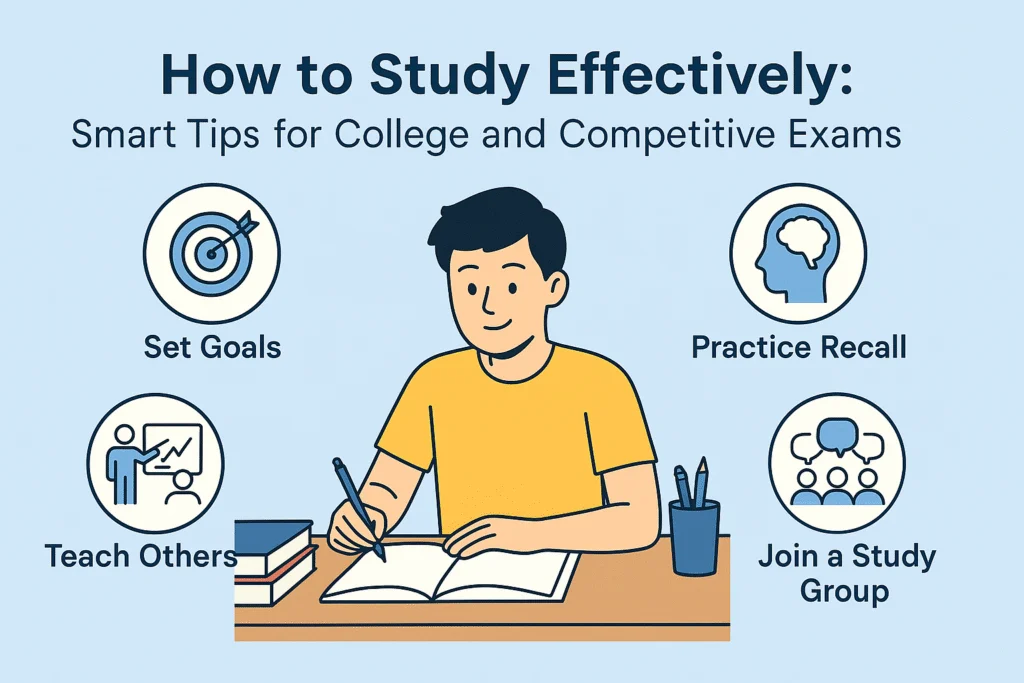
Success in competitive exams is not just about intelligence or hard work—it’s about managing time effectively. With vast syllabi, multiple subjects, and limited preparation time, students who master time management gain a clear advantage. Here are practical and proven time management techniques to help you study smarter and perform better in competitive exams.
1. Set Clear Goals and Priorities
Begin with clarity. Break your syllabus into daily, weekly, and monthly goals. Prioritize topics based on difficulty and weightage. When you know what to study and when, you avoid confusion and wasted effort.
>>Tip: Start your day by listing 3–5 achievable study tasks.
2. Create a Realistic Study Timetable
A good timetable balances all subjects and includes revision and practice.
- Study in focused blocks (45–90 minutes)
- Add short breaks to refresh your mind
- Allocate more time to weak areas
Consistency matters more than studying long hours occasionally.
3. Use the Pomodoro Technique
The Pomodoro method improves focus and prevents burnout.
- Study for 25 minutes
- Take a 5-minute break
- After 4 sessions, take a longer break
This technique is especially useful for long study days and theory-heavy subjects.
4. Avoid Multitasking
Multitasking reduces efficiency and concentration. Studying while checking your phone or switching subjects frequently wastes time.
- Keep your phone away
- Study one subject at a time
- Focus fully on the task at hand
Deep focus leads to faster understanding.
5. Plan Revision Smartly
Revision is as important as learning new topics.
- Schedule weekly and monthly revisions
- Use short notes, flashcards, and formula sheets
- Revise difficult topics more frequently
Without revision, even well-studied concepts fade quickly.
6. Practice with Time Limits
Competitive exams are time-bound.
- Solve MCQs with a timer
- Take regular mock tests
- Practice completing papers within the exam duration
This builds speed, accuracy, and exam confidence.
7. Learn to Say No
Avoid distractions like unnecessary social media, excessive screen time, and last-minute plans. Learning to say “no” during preparation is a powerful time-saving habit.
8. Take Care of Your Health
Good time management also includes rest.
- Sleep 7–8 hours daily
- Eat healthy food
- Exercise or stretch lightly
A healthy mind processes information faster and better.
Final Thoughts
Time is the most valuable resource in competitive exam preparation. With clear planning, focused study sessions, regular revision, and disciplined habits, you can make the most of every hour. Remember, it’s not about studying more—it’s about studying right.